
P01
Target-device constraints
Decision questionCan the selected workload meet the client-defined timing, resource, and quality budgets on the actual hardware and software image?
SVEdge AI & Autonomy
Benchmark, package, harden, and observe AI workloads for devices with constrained compute, power, or connectivity.
Robotics programs · Defense systems · Industrial edge deployments
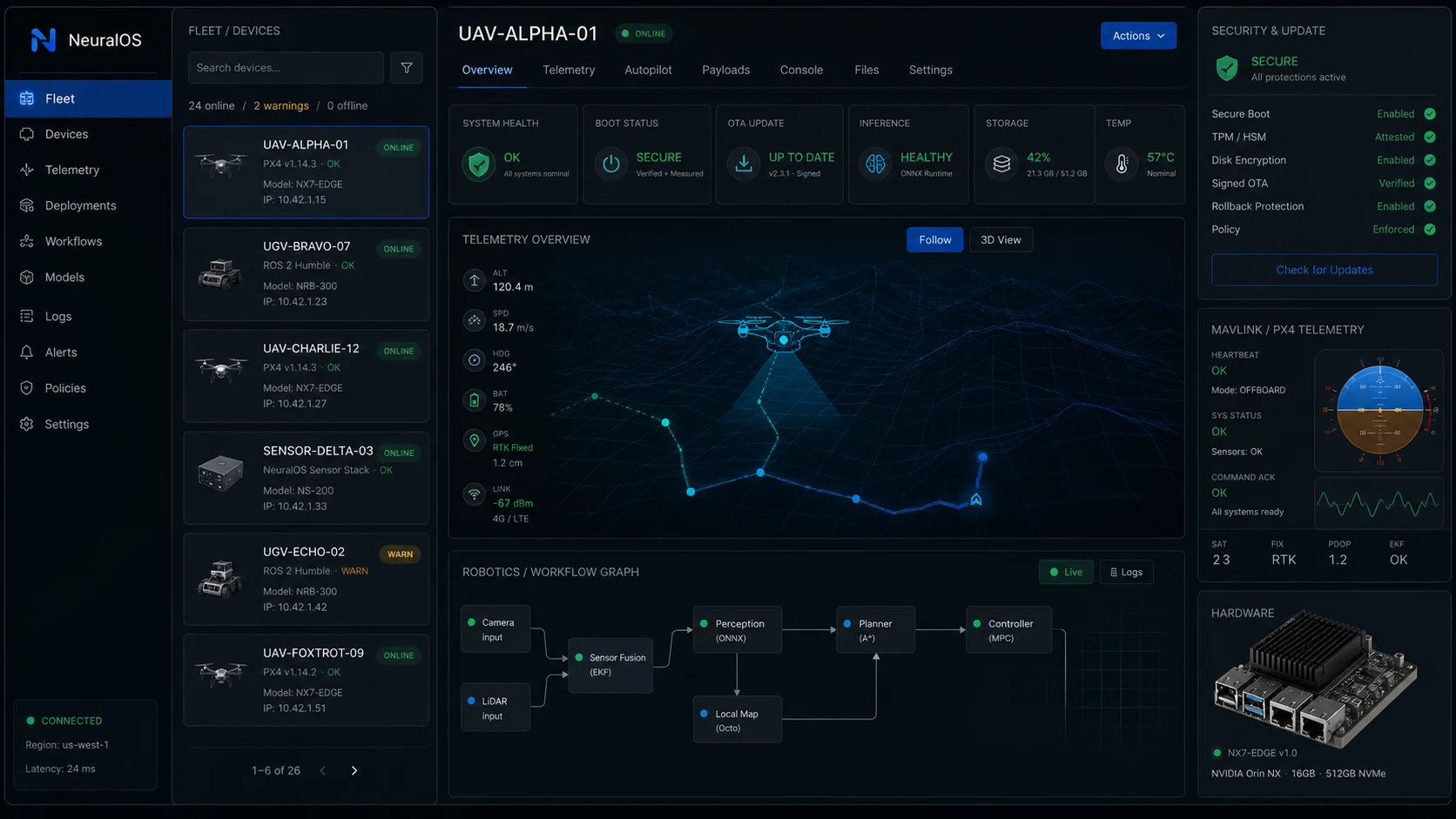
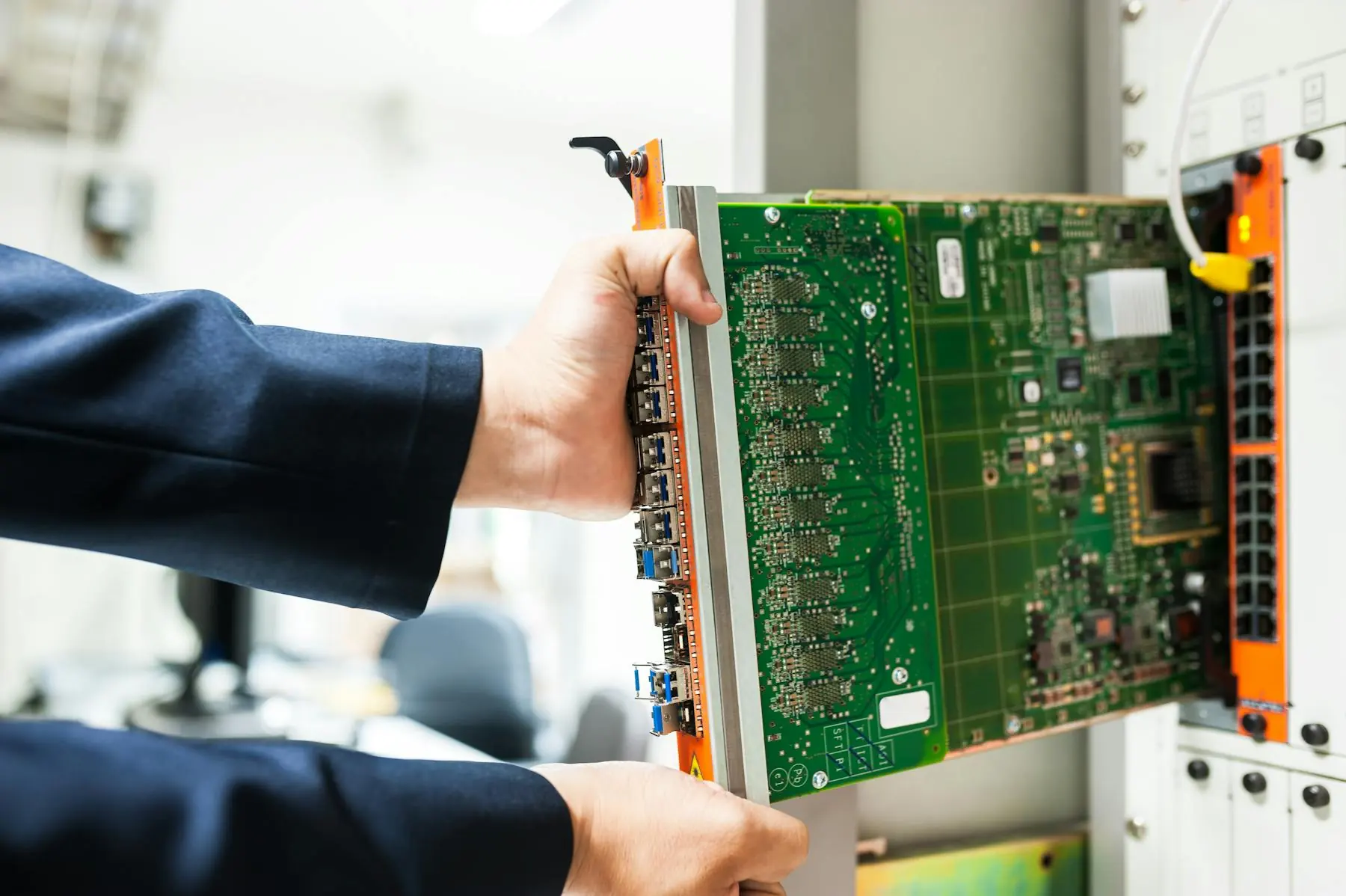 Concept visualization
Edge deployment
The edge engagement connects hands-on device integration, model optimization, runtime hardening, staged updates, observability, and fleet operations into a supportable production path.
Layer 01
Layer 02
Layer 03
Layer 04
01 · Mission context
A model that performs well in a workstation evaluation may miss timing, power, thermal, memory, security, or resilience requirements on the target device. Edge AI and supervised autonomy require hardware evidence, explicit degraded modes, controlled releases, and visible human authority.
Target reality
Edge work begins with the named hardware, software image, sensors, competing workloads, environmental assumptions, and communications profile. Measuring that complete target establishes where latency, memory, power, temperature, timing, or accelerator support constrain the workload, and prevents a workstation result from being treated as field evidence.
P01
Decision questionCan the selected workload meet the client-defined timing, resource, and quality budgets on the actual hardware and software image?
P02
Decision questionWhich functions continue locally, queue, reduce capability, fail safe, or require an operator when communications degrade?
P03
Decision questionHow will the programme prove artifact integrity, staged rollout, device identity, compatibility, and rollback before fleet-wide change?
P04
Decision questionWhat may the system sense, infer, recommend, or control, and where must human authority or an independent safety mechanism intervene?
The operating envelope also assigns authority. Perception, recommendation, control, and emergency behavior are separated, then examined under stale sensors, uncertain output, resource pressure, and lost connectivity. This makes local continuation, queuing, operator escalation, and safe-state transitions explicit before optimization decisions narrow the available options.
Target-device constraints. Compute, memory, power, temperature, sensor timing, accelerator support, and competing workloads change what the model can do in operation.
Degraded connectivity. Cloud dependencies may become slow, intermittent, denied, or unavailable while the local system still has to remain safe and understandable.
Secure lifecycle. Models, firmware, configuration, credentials, and telemetry must move through a release chain that can identify devices, reject untrusted artifacts, and recover from a bad update.
Autonomy authority. Perception, prediction, recommendation, control, and emergency behaviour carry different consequences and should not be collapsed into one autonomy claim.
02 · Delivery system
Inputs, outputs, maturity, and the evidence boundary travel together. Capability is never separated from the condition under which it can be accepted.
Measure the target compute, accelerator, memory, storage, power, thermal, sensor, network, and real-time constraints that shape model and runtime choices.
Output · Device profile, compatibility matrix, bottleneck record, measurement plan, baseline image, and go/no-go questions for optimisation.
Package and optimise the approved model while preserving preprocessing, postprocessing, calibration, output semantics, and fallback behaviour.
Output · Versioned deployment package, benchmark report, model card addendum, runtime configuration, dependency manifest, and fallback path.
Design device identity, artifact signing, compatibility checks, staged deployment, telemetry, rollback, and recovery around the target platform's supported controls.
Output · Release manifest, signing and verification path, rollout rings, health signals, rollback test, recovery runbook, and fleet evidence view.
Exercise sensor faults, stale data, communications loss, resource pressure, uncertain outputs, operator override, and safe-state transitions in a bounded scenario set.
Output · Scenario traces, failure-response matrix, authority evidence, residual-risk record, operating limits, and field-pilot recommendation.
Measure the target compute, accelerator, memory, storage, power, thermal, sensor, network, and real-time constraints that shape model and runtime choices.
Package and optimise the approved model while preserving preprocessing, postprocessing, calibration, output semantics, and fallback behaviour.
Design device identity, artifact signing, compatibility checks, staged deployment, telemetry, rollback, and recovery around the target platform's supported controls.
Exercise sensor faults, stale data, communications loss, resource pressure, uncertain outputs, operator override, and safe-state transitions in a bounded scenario set.
03 · System boundary
The reference path links device interfaces to the inference runtime, policy constraints, and the fleet evidence plane. A model package is accepted together with its preprocessing, dependencies, configuration, compatibility rules, and operating limits, so the artifact that was evaluated is the artifact presented for staged release.
Reference layers support scoping. Interfaces, owners, and target-system constraints remain subject to validation.
Control how timestamped observations and commands enter and leave the compute boundary, including validity, freshness, calibration, and interface health.
Typical elements · Cameras, radar, telemetry buses, industrial protocols, robotics middleware, time synchronisation, and watchdog signals.
Schedule preprocessing, inference, postprocessing, acceleration, and resource isolation against the actual device and competing workloads.
Typical elements · Model runtime, accelerator delegate, memory budget, process supervision, local cache, and deterministic validation steps.
Translate model output into bounded recommendations or actions using confidence policy, authority gates, independent constraints, and degraded modes.
Typical elements · Rule engine, operator confirmation, safety monitor, geofence or process envelope, fallback controller, and emergency stop path.
Manage device identity, signed artifacts, staged updates, configuration, health telemetry, incident context, and rollback across the declared fleet.
Typical elements · Device registry, artifact repository, release rings, compatibility policy, health dashboard, audit trail, and recovery tooling.
Operational handover covers device identity, rollout cohorts, health signals, intervention thresholds, and a tested recovery path. Maintainers and operators receive the same release identity and failure context, while unresolved environmental, safety, or certification questions remain outside the pilot claim and with the responsible programme authority.
04 · Assurance dossier
The primary story remains calm; profiles, scope, handover evidence, and discovery questions stay available as a structured technical annex.
An aerial or ground platform performs perception and route-support functions with intermittent communications and a named operator authority model.
A plant needs local inspection near machinery where bandwidth is constrained and a false accept or false reject has different operational costs.
A remote team needs local classification or anomaly support while synchronisation with central services is delayed or unavailable.
Included in this service pattern
Not implied by this page
Handover evidence
The approved package is measured on the named device and software image against client-defined task quality, timing, memory, power, and thermal criteria under representative load.
Communications loss, stale or missing sensors, resource pressure, and unavailable dependencies produce the agreed local continuation, queue, operator escalation, or safe state.
The target device rejects an unauthorised or incompatible artifact, records the release decision, supports staged rollout, and completes the tested rollback or recovery path.
Scenario traces show where model output becomes a recommendation or action, which independent constraints apply, who can override it, and when automation stops.
Discovery questions
Evidence register
References shape requirements and review questions. Inclusion does not imply certification, endorsement, partnership, or approval by the publisher.
05 · Engagement record
Inspectable outputs close the engagement; related services point only to the next bounded step.
Deliverables
Engagement artifacts
04 records per engagement
Edge AI & Autonomy
Move from target-hardware measurements to a controlled pilot with explicit security, connectivity, and rollback boundaries.